
Our Location
304 North Cardinal St.
Dorchester Center, MA 02124

Explore the key differences in processing, flavour and character across green tea, black tea, oolong tea and more.
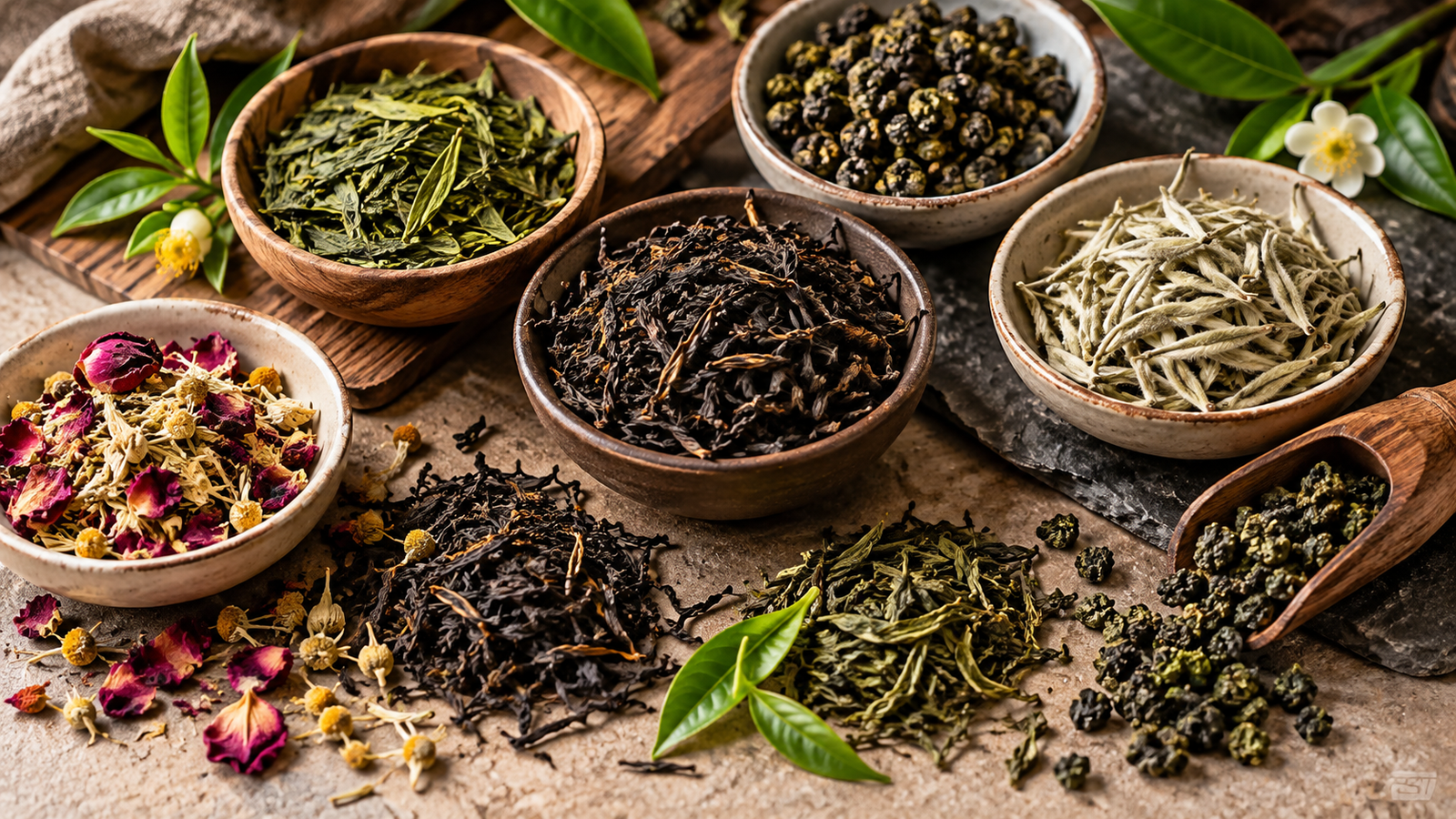
Green tea, black tea and oolong tea all come from the same tea plant, Camellia sinensis. What makes them different is mainly what happens to the leaves after they are harvested.
Processing influences the colour, aroma, flavour, body and overall character of the finished tea. Green tea is generally made with minimal oxidation, black tea is fully oxidised, and oolong tea sits between the two, with partial oxidation.
This means that the difference is not simply about the colour of the finished drink. Each style represents a different approach to processing the same basic tea leaf.
Green tea is known for its fresh, delicate character. After harvesting, the leaves are processed to limit oxidation, helping preserve their natural colour and producing a lighter style of tea.
Depending on the origin and processing method, green tea can show grassy, vegetal, floral, nutty or lightly sweet notes.
The final cup is often lighter in colour than black tea, although the appearance can vary considerably between different green teas.
The freshly harvested leaves are heated relatively soon after picking to reduce oxidation. They may then be shaped, rolled or otherwise processed before drying.
Different tea-producing regions use different methods. This is one reason green teas from different origins can taste remarkably different even though they are made from the same species of plant.
Green tea can range from fresh and vegetal to soft, floral and slightly sweet. Some varieties have a delicate grassy character, while others can have roasted, nutty or lightly fruity notes.
Brewing also has a major influence on the flavour. Water that is too hot or an excessively long steep can make some green teas taste harsh or bitter.
Black tea is processed with much greater oxidation than green tea. This produces the darker leaf colour and deeper flavour commonly associated with the style.
Depending on its origin and processing, black tea can show notes ranging from malty and rich to floral, fruity, woody or sweet.
Black tea is often fuller-bodied than green tea, although the exact character depends heavily on the tea’s origin, cultivar, harvest and production method.
After harvesting, the leaves are allowed to undergo oxidation before being dried. During this process, chemical changes within the leaves influence their colour, aroma and flavour.
Once the desired level of oxidation has been reached, the leaves are dried to stabilise the finished tea.
The degree of oxidation is one of the key reasons black tea has a deeper and more developed character than green tea.
Black tea can offer a wide range of flavours. Depending on the tea, you may notice malty, woody, fruity, floral, caramel-like or gently sweet characteristics.
The brewing method also affects the final cup. Longer steeping generally produces a stronger infusion, but excessive brewing can bring out unwanted bitterness or astringency.
Oolong tea occupies an interesting position between green and black tea. It is partially oxidised, meaning its processing falls somewhere between the two styles.
This broad category includes a remarkable range of teas. Some oolongs are lightly oxidised and floral, while others are darker, fuller and more roasted.
Because of this wide range, describing all oolong tea with a single flavour profile is difficult.
Oolong production involves several stages, including withering, controlled oxidation, shaping and drying. The producer carefully manages the process to develop the desired character.
The degree of oxidation and the way the
